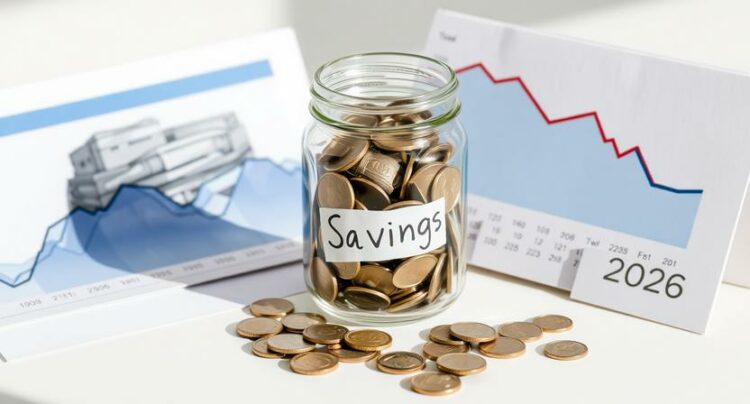
Certificate of deposit rates have gone through a dramatic shift over the past two years, leaving savers with a critical decision in 2026. With interest rates no longer climbing and signs pointing toward a gradual decline, the big question is whether to lock in current yields or stay flexible.
The answer is not as simple as it once was. Today’s environment demands a more strategic approach, especially as central bank policies, inflation trends, and competition among banks continue to shape where CD rates are headed next.
Where CD Rates Stand Right Now
Current Rates Still Strong but Cooling
Despite recent declines, CD rates remain relatively attractive compared to historical averages. Top one-year CDs are still offering around 4.50 percent, far above the national average.
This gap highlights how important it is to shop for competitive rates rather than settling for standard bank offerings.
A Shift From Peak Levels
Rates are no longer at their highs from 2023, when aggressive tightening pushed yields upward. Since then, rate cuts have begun to pull returns slightly lower.
What Is Driving CD Rates in 2026
The Role of Central Bank Policy
Interest rates on CDs are closely tied to central bank decisions. When policy rates fall, banks typically lower the returns offered on savings products.
Over the past eighteen months, rate cuts have already reduced yields, and expectations point to at least one more reduction later in 2026.
Inflation and Economic Stability
Inflation has moderated, moving closer to target levels. At the same time, economic growth remains steady, creating a more stable environment.
This combination suggests that dramatic rate changes are less likely, with a slower and more gradual trend expected.
Check Out What was going in 2025: Top 16 Short-Term CDs to Maximize Your Returns in 2025
CD Rate Outlook Through 2027
Short-Term Expectations
Most forecasts suggest that CD rates will remain relatively stable in the near term, with slight declines through mid-2026.
Short-term CDs, such as six-month and one-year terms, may see only modest changes over the next several months.
Longer-Term Trends
By the end of 2026 and into 2027, rates are expected to gradually decline further. Longer-term CDs may settle closer to the mid three percent range if current trends continue.
Comparing CD Terms and Projections
Short-Term CDs
Six-month and one-year CDs currently offer some of the highest yields. These options provide flexibility and allow savers to reinvest if rates change.
Medium-Term CDs
Two- and three-year CDs offer slightly lower rates but can still provide a balance between yield and commitment.
Long-Term CDs
Five-year CDs offer stability and predictable returns. However, locking in for a longer period carries the risk of missing better opportunities if rates rise again.
Should You Lock In Now or Wait
When Locking In Makes Sense
If you have funds that you will not need for several years, locking in current rates can provide certainty. Even if rates decline slightly, today’s yields are still competitive.
When Waiting May Be Better
If you expect rates to rise again or need flexibility, shorter-term CDs may be a better option. This allows you to adjust your strategy as conditions change.
The Case for a CD Ladder Strategy
Spreading Risk Over Time
A CD ladder involves dividing your investment across multiple terms. For example, you might invest in six-month, one-year, two-year, three-year, and five-year CDs.
As each CD matures, you reinvest at current rates, reducing the risk of locking in all your money at the wrong time.
Why It Works in Uncertain Markets
This strategy balances flexibility and return. It allows you to benefit from current rates while maintaining the ability to adapt to future changes.
Balancing Yield and Flexibility
Avoid Chasing Small Differences
The difference between rates may seem significant, but in practice, small variations often have a limited impact on overall returns.
Focusing on flexibility and overall strategy is usually more important than chasing the highest possible rate.
Matching CDs to Your Goals
CDs should align with your financial timeline. Short-term goals may require more liquid options, while long-term savings can benefit from locked-in rates.
Risks to Keep in Mind
Early Withdrawal Penalties
Breaking a CD before maturity can result in penalties, which may reduce or eliminate your interest earnings.
Opportunity Cost
Locking in a long-term CD means giving up the chance to benefit if rates rise unexpectedly.
Inflation Impact
If inflation increases again, fixed CD returns may lose purchasing power over time.
What Experts Are Saying
A More Stable Rate Environment
Most analysts expect fewer dramatic rate moves going forward. Instead, the focus is shifting toward stability and gradual adjustments.
Planning for Multiple Scenarios
Rather than trying to predict exact rate movements, experts recommend building a strategy that works whether rates rise, fall, or remain steady.
Practical Strategy for 2026 Savers
Short-Term Focus With Flexibility
Many savers are choosing shorter-term CDs to maintain flexibility while still earning competitive returns.
Combining Terms for Balance
Mixing short- and long-term CDs can provide both income and stability, helping manage uncertainty.
Final Thoughts
CD rates in 2026 are entering a more stable but slightly declining phase. While current yields remain attractive, the window for locking in higher rates may gradually narrow.
The key is not to guess the perfect moment, but to build a strategy that works across different scenarios. Whether you choose to lock in now or stay flexible, understanding the direction of rates can help you make smarter decisions with your savings.